
Used car dealer insurance, license first
An independent used dealer's coverage starts where the license does: a surety bond and state insurance conditions, set by the motor vehicle agency, before the first car sells. Then the business itself gets insured: inventory standing in the weather, test drives, customers on the lot, and whatever a floorplan lender's agreement demands on top.
Garage liability vs garage keepers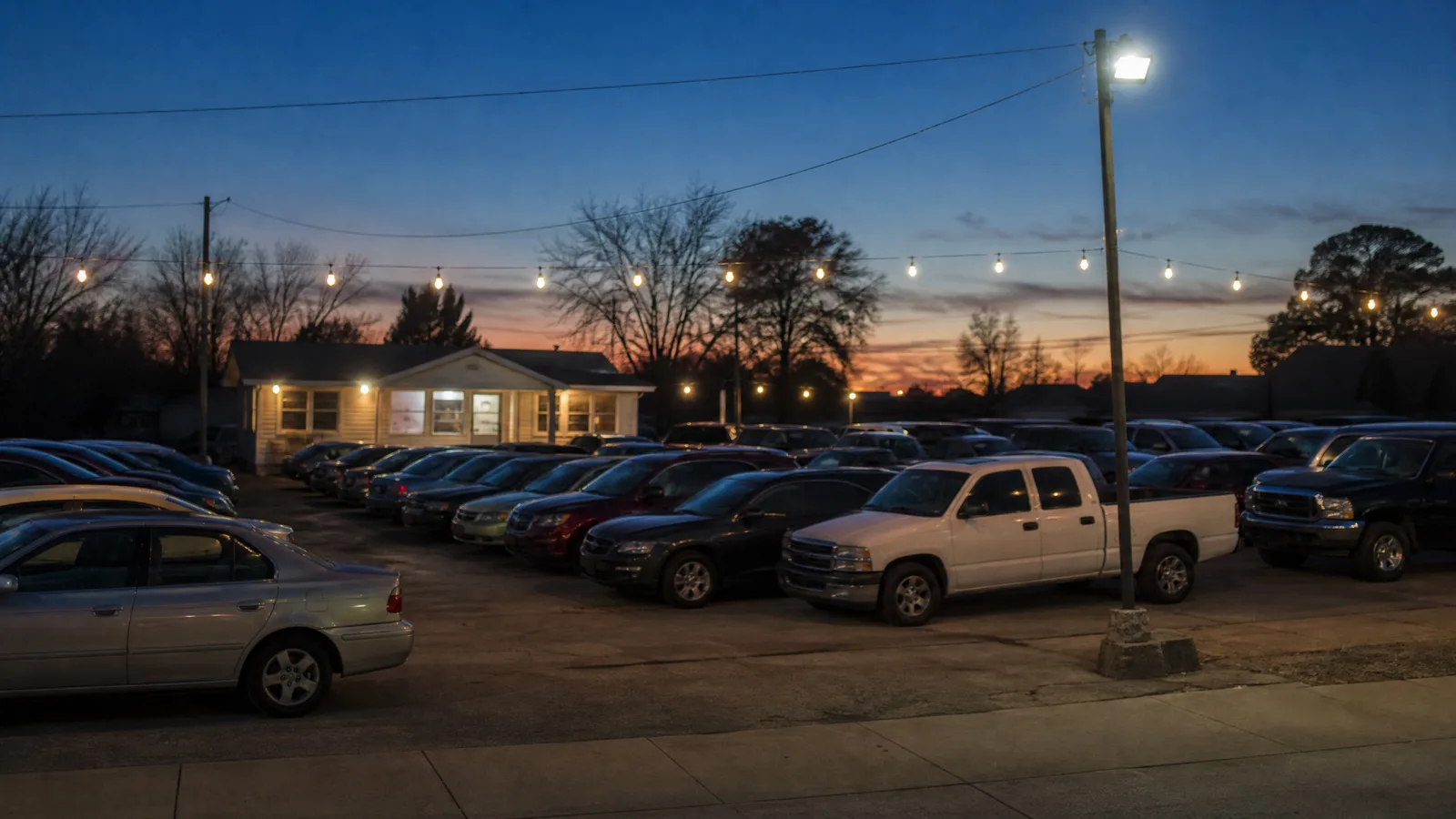
What the license demands
The independent dealer is the requirement-driven case in the auto trade. The state motor vehicle agency issues the license and attaches conditions: a surety bond standing behind your obligations to the people you deal with, IRMI's three-party structure with the promise running away from you (IRMI, surety bond), and insurance evidence that in most states centers on garage liability. Texas is the example this site can cite to the letter: a $50,000 bond required by statute before the dealer number issues, conditioned on paying valid drafts and delivering good title, franchised dealers exempt (Tex. Transp. Code §503.033). Your state's version lives on its own agency's pages; our requirements guide covers the verification habit, and the bond page takes the bond apart.
What the business needs beyond it
The lot. Inventory is the property story, concentrated: vehicles you own, in the open, where one hailstorm reaches all of them at once. The NAIC's property categories apply (NAIC, Insure U: Small Business Insurance), and dealer programs write inventory specifically. Floorplanned units add a second master: the lender's agreement sets its own insurance requirements on its collateral, separate from the state's, and both belong in the same agent conversation.
The operations. Customers on the lot and test drives on your plates are the liability texture of the trade, the garage liability conversation (IRMI). A lot that also runs a service bay adds the customer-car custody question, decided on our comparison page, and staff brings workers compensation, required in nearly all states. The full dealer picture, including why this branch reads differently from the repair trade, starts at the dealer hub. Or start at the overview.