
Auto repair shop insurance, without the guesswork
A repair shop's working set is garage liability for the operations, garagekeepers for the customer cars in its care, property coverage for the building and equipment, and workers compensation once there are employees. Almost none of it is legally required for a repair shop, which makes knowing why you carry each piece more important, not less.
Garage liability vs garage keepers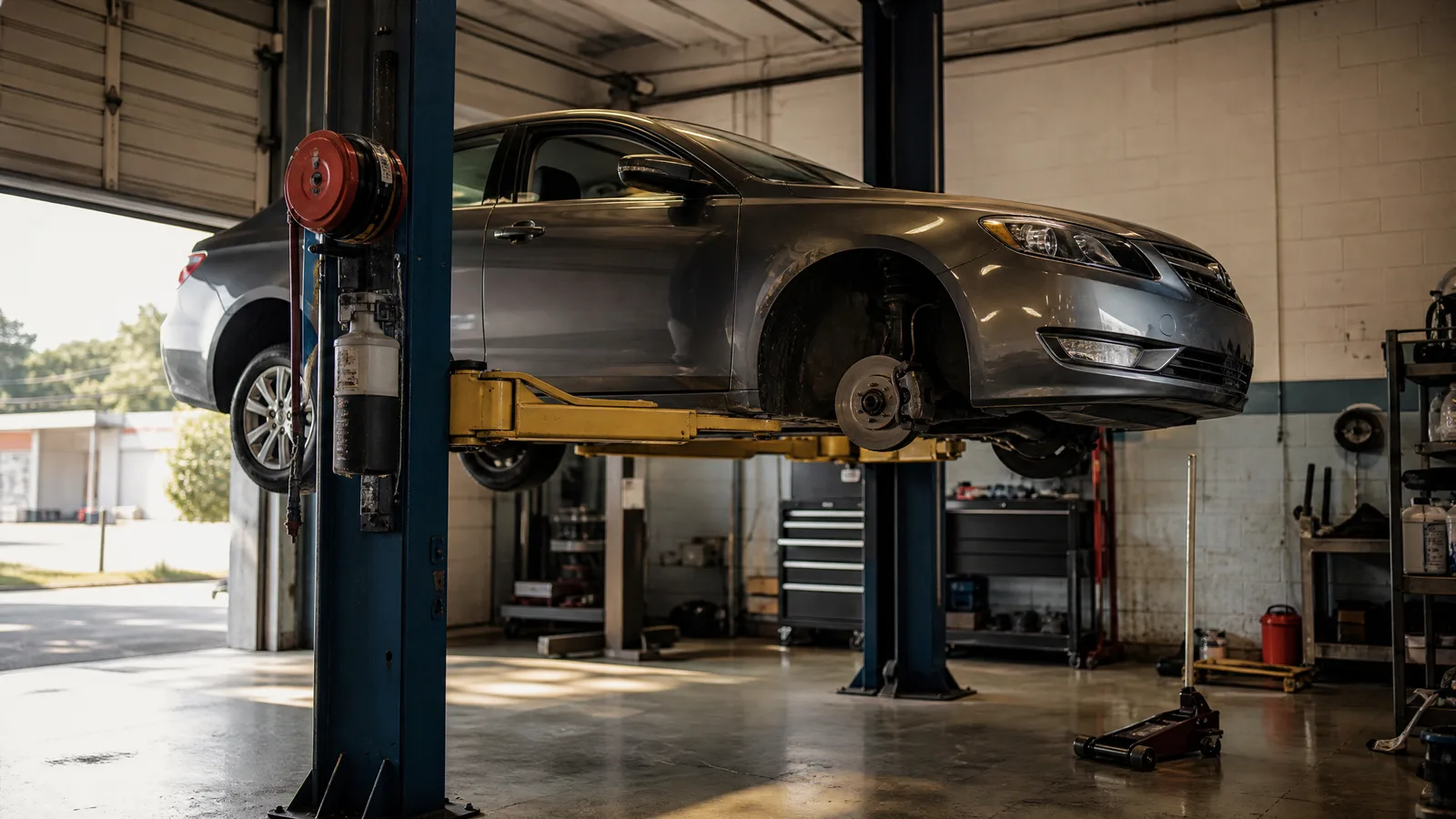
The two garage coverages, applied to a shop
The auto trade runs on two coverages with confusable names, and the difference is the first thing to get right. Garage liability covers the business's legal liability for bodily injury and property damage arising out of operations (IRMI): the customer who slips on a wet bay floor, the road test that goes wrong. Garagekeepers covers the exposure that defines a repair shop, damage to a customer's auto left in your care for service or repair (IRMI), with basic and direct variants that behave very differently when a storm or a thief finds your lot. The full which-do-you-need walk-through, situation by situation, is our garage liability vs garage keepers page, and it is the most useful ten minutes on this site.
One thing this page will not do is invent a mandate. For repair shops there is rarely a legal insurance minimum; the requirement-driven half of this trade is dealers, where coverage is commonly a license condition set by the state motor vehicle agency. A repair shop buys coverage because a lift can slip, a lease demands it, and a customer's car is a customer's trust. Those reasons hold up fine without a statute attached.
Property, people, and packaging
Property. The NAIC's business property categories, building, equipment, machinery, inventory, owned or leased, map directly onto a shop: lifts, diagnostic equipment, tools, parts stock (NAIC, Insure U: Small Business Insurance). Techs' own toolboxes are a classic gap worth raising explicitly: whose policy covers a stolen box, yours or the tech's, is answered in underwriting, not assumed.
People. Hiring brings workers compensation, required in nearly all states, and a shop floor is a workplace of lifts, flammables, and heavy parts. Storage of solvents and waste oil, lift maintenance, and road-test practice are the facts an underwriter asks about, because they are the facts that produce claims.
Packaging. A businessowners policy bundles property, liability, and business interruption for small businesses (Insurance Information Institute), but the auto trade's defining exposures live in the garage forms, which is why many shops end up on a garage package instead. Whichever shape it takes, the site's standing principle applies: the policy covers the operation it was told about, so towing, storage, used-car sales on the side, and mobile work all belong in the quote conversation. Body work is its own risk with its own page, auto body shop insurance, and a premises-less operation should read mobile mechanic insurance. Or start at the overview if you are still mapping what you run.
What the package ends up costing is decided by the classification your work falls into, the payroll and receipts an auditor measures after the year ends, and the custody exposure on your lot. Those inputs are worked through on what sets an auto repair shop's insurance cost.